Tinder
Breaking the Illusion of Scarcity: A Squatter’s Primer
November 2003
The tract-housing cookie cutter is hard at work, sucking up trees for the matchstick houses, churning out more “anywhere USA.” Asphalt is thrown down and rolled out, left to bake in the sunlight, raising temperatures. Wild habitats are constantly smothered in the sprawling blanket of subdivisions. Roaring streams are tamed and piped underground. The sparkling reflection of the moon at night is traded for the buzzing orange glow of streetlights. Suburban areas are growing, but we don’t have to support this. There are other places to live.
Contained inside the city limits of Philadelphia, Pennsylvania, there are more than 30,000 empty housing units, yet affordable housing remains scarce. Scarcity is a fundamental element of capitalism, and it must remain so in order for the economy to thrive.
Developers manufacture a false atmosphere of scarcity in order to secure customers for unnecessary new housing developments by either demolishing older houses or by keeping the doors on them closed. If we are to avoid urban sprawl, we must see through the illusion of scarcity and utilize what already exists. So dig a pry bar under the boards covering the window, crack it open and squat it.
Finding a Place
Make sure the place you choose to squat is truly abandoned. Peek in the windows and see if it’s dirty. A “condemned” sign on the front door or window can be a good thing: It takes a lot more work and money for the owners to fix up a condemned house, so it probably won’t be rented out next month.
If there is a realtor’s padlock on the door or the grass has been recently cut, then it’s a no go. Boards on the windows and doors might seem more dismal, but they signal that the house is uninhabited and provide privacy from nosy neighbors who might call the cops in the future. If the place looks unoccupied and unattended, write down the address. If no address is visible, take note of the cross streets and how many lots there are between the corner and the house.
Then it’s time to take a little stroll down to the tax assessor’s office. Here you can locate the address of your prospective house by using lot maps. The address can then be used to learn about the history of the location. What is it that you’ll want to know? Huge amounts of back taxes could mean that the owners aren’t wanting to invest anything into the property. If the owners live far away, they might not visit the property often. Among other things, the retail value and whether the property is condemned are also listed in the public record.
Squatters’ Rights
Some cities in the US have laws stating that if a person squats for a certain number of days, they have acquired rights to the housing and are no longer trespassing. In other cities, the first step is to try and establish basic tenants’ rights. To do this, you must establish some sort of rent payment and receive permission to live there.
The most common way to pay rent is with cash, but it’s not the only option. Rent is also frequently paid in work trade—for example, making repairs, watching over the place, cleaning it up and so forth. The landlord’s permission doesn’t have to be explicit, or even written down. The rental agreement can be written, verbal or simply implied by the landlord’s conduct.
If the landlord gives up on evicting you, then you have their implied consent to stay there. In court, the argument could be made that when the landlord came by, you made an oral agreement to live there in exchange for watching over the property.
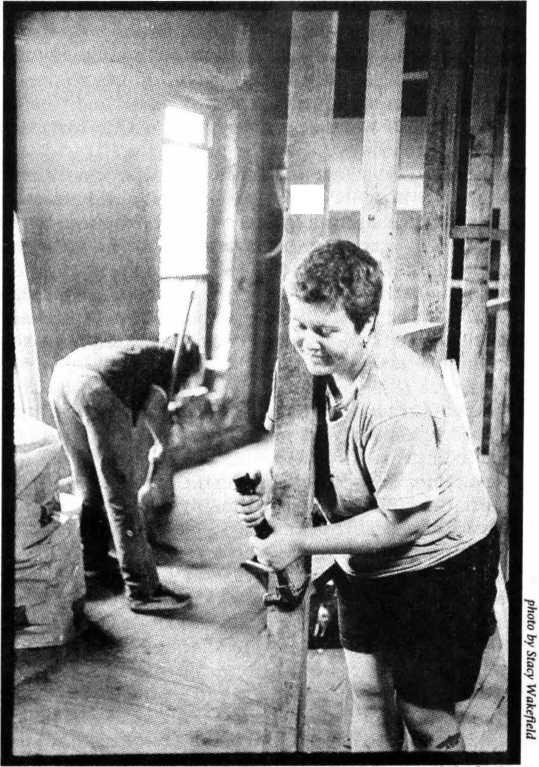
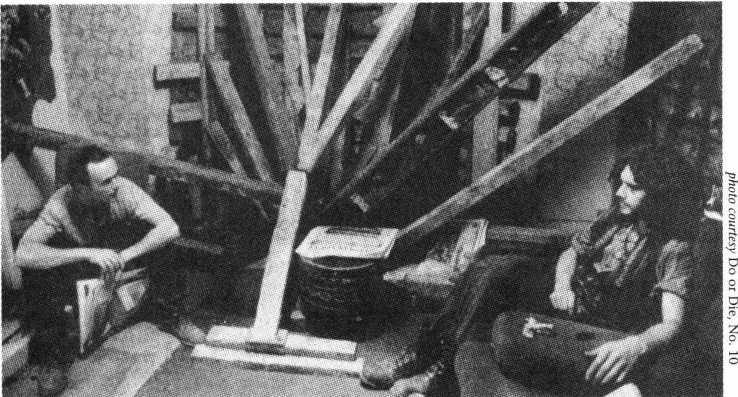
Attempts to evict you can be stalled by making it appear that you’re a valid tenant who is supposed to be there. If the cops come and the place looks clean—with pictures’on the walls and furniture to sit on—it’ll be easier to convince them not to throw you out. If you have any mail or utility bills delivered to the house, the police will be more likely to leave it as a civil matter, even if the landlord is present. In that case, the owner will have to evict you formally in court.
If you do get busted for popping a squat, you can expect to be charged with a Class B misdemeanor of trespassing or breaking and entering.
Adverse Possession
If you get really lucky, sometimes squatting can actually lead to the complete legal possession of the house through what’s called “adverse possession.” Every once in a while, people squat a house that seems to be truly abandoned. If you’ve dealt with the police and neighbors, and there’s still no sign of the landlord, then you can proceed in claiming adverse possession. In a nutshell, if you pay the back taxes and make improvements on the property—and after you’ve openly squatted the place for five to 20 years (or longer, depending on the state laws)—you can claim adverse possession and the house is yours.
Housekeeping
If the toilet doesn’t work, you can use a five-gallon bucket, just be sure to sprinkle a little sawdust or dirt over your business when you’re done. When the bucket’s full, empty it into a deep hole in the backyard and let it compost. Remember to piss in a separate jug, so as not to drown composting humanure.
Check the circuit breakers for electricity. If there is no juice, the meter can be jumped with a piece of flattened one-inch copper pipe. Whatever you do, do not try this without someone who knows what they are doing.
Water can often be turned on at the main valve out in front of the house. Sometimes there’s a metal cap along the sidewalk that says “W,” “Public Works” or something similar. Remove the cap, and you’ll see a little knob a few feet down. This can be opened with a special “water key.” You might be able to make one yourself by attaching a wrench to the end of a pole or by welding one.
You can turn the gas on using a similar technique. However, before lighting up the stove, you’ll want to check the lines inside the house for leaks by brushing them with soapy water and checking for bubbles. You’ll want to do this at the same time you turn on the gas.
Of course, there’s no right way to go about squatting. If you don’t want to deal with bills and establishing tenants’ rights, then don’t bother. Just have as much fun for as long as you can. You’ll figure a lot of things out as you go. And if your squat only lasts a month, you’ve given that much less money to developers.
A squat is not some place that you heard about in the Lower East Side of Manhattan, crawling with jaded old punk rockers. It’s that regular old house around the damn corner. Well, at least it becomes a squat as soon as you break in...
Not Quite Armchair Reading
Here’s some useful squatting resources to get you going.
-
Homes Not Jails (HNJ) advocates the use of vacant and abandoned housing for people who are homeless. HNJ has a great deal of resources available on tenants’ rights and legal expectations.
For more information, visit www.homesnotjails.org.
-
No Trespassing, by Anders Corr, South End Press, 1999. This book contains everything from the theory and practice of squatting to stories on squatting as direct action, as well as the hidden histories of housing.
-
Not For Rent, by Stacy Wakefield and Grrrt, Evil Twin Publications, 2003. Interviewsand conversations with squatters, eco-activists, musicians, anarchists and all kinds of creative folks in the UK.
-
War in the Neighborhood, by Seth Tobocman, Autonomedia, 2000. A graphic novel documenting the vibrant squatting movement in the Lower East Side neighborhood of Manhattan during the ‘80s. In comic book form, there are many inspiring tales of how squatters battled the New York Police Department to defend their homes.
-
For up-to-date international news and legal resources, visit www.squat.net. The main focus here is on squatted houses, car sites and other free spaces.